
Shame
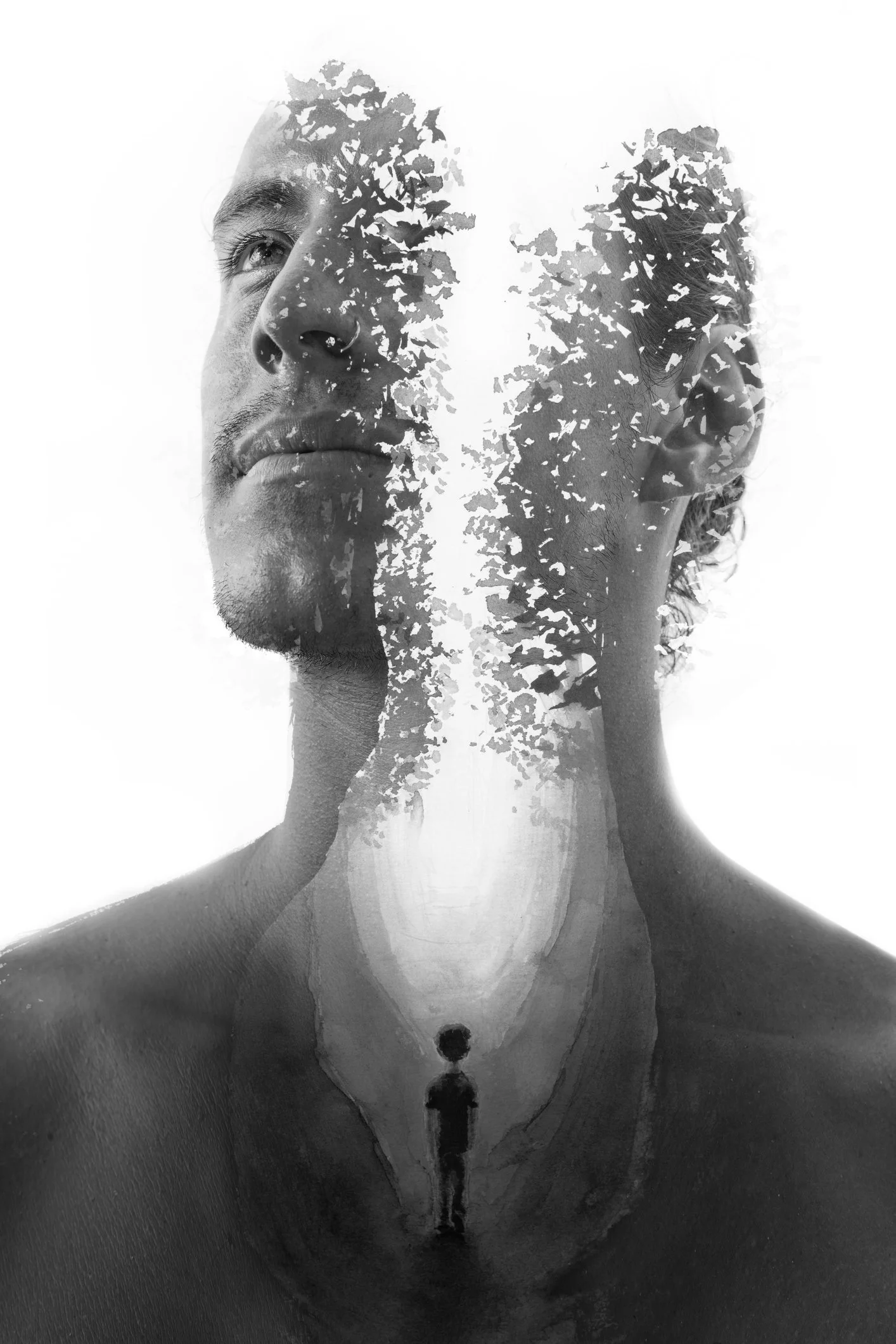
“Following your feelings will lead you to their source. Only through emotions can you encounter the force field of your soul” - Gary Zukav
The clearer my mind becomes, the deeper into it I’m able to see.
Like the crystal blue waters off Key West where I used to live—when the surface stills, the ocean floor far below becomes visible.
Sharing my long struggle to stop getting high a couple of months ago stilled those turbulent waters.
At first, I experienced what Brené Brown calls a “vulnerability hangover.”
I hadn’t anticipated how much outreach and support it would catalyze. It felt out of proportion to how I saw the struggle.
But nothing else I’ve shared this year generated that much energy. I realized I was resisting it.
So I allowed it.
That collective energy was like a team helping me pull an anchor up from the depths. An anchor that was much heavier than I realized.
That anchor was shame.
And as I felt lighter, freed from the weight, I began to wonder:
How much hidden shame anchors all of us beneath the surface?
And what is actually happening in our brains?
Following the Rope
It’s estimated that 70% of adults—over 220 million people in the U.S.—have experienced at least one form of trauma in their lifetime.
We tend to think of trauma with a capital T: abuse, neglect, abandonment…the obvious kinds that create obvious damage.
But the brain is exquisitely sensitive as it develops. Smaller, more subtle lower case “t” traumas leave lasting marks, too.
I’m part of Gen X, raised in the 80s.
We lived through the highest divorce rate of any generation before or since. One of the most disorienting things a child can experience.
It’s easy for kids to internalize turbulent emotional moments as a reflection of who they are. Especially the younger they are.
As kids, we think adults know everything. I remember thinking adults were godlike in that way. And they are in a sense, they provide everything we need to survive, exist and understand the world.
So if the adults are always right, then we think “Something is wrong with me. I’m the problem”
And that’s the seed of shame.
Guilt says: “I did something bad.”
Shame says: “I am bad.”
Our young lives are filled with moments that wire our survival systems, our limbic brain, to associate disconnection with danger.
Imagine a toddler running into the street. A parent screams, the child cries. That’s fight-or-flight firing. But if the parent picks them up, explains what happened, and gives them a hug, the child learns regulation.
Now imagine a parent who is given to neglect. Yelling. Criticism. A parent careless with his tone. Distracted . Overwhelmed. Dealing with the challenges we now know as adults are part of life.
The young brain doesn’t differentiate.
The same fear circuitry fires for the child but not the parent. The repair is easy to neglect.
A young kid doesn’t think: “Dad’s upset because he’s having a rough day. ”
A kid thinks: “Something’s wrong with me.”
The more it happens, and the more it goes unregulated, the deeper the seed is planted. The heavier the anchor becomes.
Before we look to blame…Who taught our parents any different? Who taught their parents? Neuroscience as a formal discipline is only 50 years old. We’re only just starting to understand all of this.
Is it any wonder we all carry so much?
The Dojo of Marriage
We grow up and set sail into adulthood, not realizing we’re dragging all this weight.
For a while, we navigate just fine. But as life gets harder - more pressure, more complexity - signs emerge.
Marriage has been where I’ve learned the most about reading those signs.
At first, it’s a fairytale: love, connection, belonging. “You complete me!” I’m whole!
Not so fast…
The bait and switch is that marriage becomes the hardest personal growth journey you can undertake.
Our most intimate relationships trigger our deepest, oldest patterns.
It’s a paradox - loving someone more than anyone else and judging them just as fiercely.
That judgment activates all that limbic circuitry in the same way. Fight, flight or freeze.
The heat of the fight with a spouse can rage. Conversely we might freeze and ice them out. Both trigger the same parts of the brain that are active when we experience physical pain.
When shame is triggered, those deep emotional pathways from childhood come roaring back. Especially when our partners we lack the skill to communicate effectively and it comes across as judgement. Usually because it is. (Guilty your honor)
Judgement is flame to the gasoline of shame. Once ignited, No meaningful communication will take place.
So is it remotely surprising that over time, flight becomes the answer? Divorce rates of ~50%?
It feels easier to leave than to face what’s underneath. So much easier to blame the other.
But of course, we carry the same anchors with us into new waters.
The Way Out
That post I made two months ago brought shame into the light.
And vulnerability, I’ve learned, is the way out of shame.
That’s why it’s so terrifying.
Shame, paradoxically, protects. It’s invisible armor. A wall we build to keep others out.
We think it protects us. But it imprisons us.
The way out is to override the sirens that sound when we try to escape.
To speak the thing we’re scared to say.
For me, the deepest turning point came during a session with my coach a few years ago.
I laid down on the carpeted bedroom floor. He gently guided me into a conversation with my wounded inner child. That little boy who always showed up during fights with my wife.
Who thought she was the answer to all his unmet needs of validation, love and belonging. The source of so many of my life’s challenges that I was totally unaware of.
It was awkward. I felt ridiculous.
But I trusted Dennis and started asking my 9-year-old self questions. Almost immediately, something broke open.
A deep well of sadness erupted. Tears started pouring out of me. I sobbed.
I couldn’t speak. Just felt it all. A tidal wave of emotional energy releasing.
Eventually, I calmed.
And the adult part of me comforted the child part in a way no one had back then.
And something shifted. This wasn’t just catharsis.
This was integration.
Integration and Freedom
Integration is a psychological process that happens when we bridge the limbic system - where trauma lives- with the prefrontal cortex the seat of empathy, reason, and adult wisdom.
We create new neural pathways.
We become the loving adult that our younger selves needed. And something inside us begins to heal.
I thought, “Great, I did it!”Like getting out of an ice bath. I felt great and but not in a hurry to get back in.
But it’s not a one-and-done process. Rewiring a lifetime of patterns takes time.
But now I know the way. I’m not embarrassed to say I have conversations with this part of myself often. It’s a reflex I’ve built when I feel really upset. I know where the source is.
And when those anchors get lighter, life gets easier to navigate through.
Our automatic responses to the triggers aren’t as intense.
They don’t disappear. But they no longer have the power to completely hijack you. Your strength to choose your reaction builds.
A world of possibility opens. And if you keep doing the work, it keeps expanding.
New planes of understanding unfold…until the day we leave this one.
The Soul’s Work
This is the work I believe our souls came here to do.
To use this body, this mind, this life, to heal and evolve beyond it.
But most of us are convinced life is about horizontal integration; success, money, status, validation.
We ignore the vertical integration; the inner expansion of soul.
It’s so easy to ignore. Nobody talks about it. Not even with our spouses.. You have to really go looking for it.
Why? Because it makes no sense to the five senses we use to navigate reality and that have helped us evolve for as long as we’ve been a species.
But there’s a world beyond the senses.
And many thinkers believe this is the next evolution of humanity: To awaken to the unseen. Science is starting to grasp at it in the world of the quantum.
But we can start simply with compassion. Self compassion.
It is the antidote to judgment. It’s how we begin to release the anchors of shame.
When we are practiced in giving it to ourselves, we can begin offering it to others. For how different are they really?
But we can’t force this change in others. In fact, the more we push it, the more fiercely it is resisted. This armor has protected us forever, it doesn’t come off easily.
Only by removing our own armor and showing the way, do we have a chance to invite others in.
But when more people begin to heal, that healing ripples outward. It can gain momentum.
Spirit of the Season
I was resistant to this reflection when it surfaced for me yesterday. Shame is a big, heavy concept.
And it’s the holidays! A season of cheer!
But this is exactly the right time.
Christmas is about the story of Jesus. The ultimate example of compassion and renewal. It’s easy to forget that in the frenzy of consumerism.
Hung on a cross, he called for compassion for the people who did it.
I didn’t arrive at this understanding of shame, vulnerability, and compassion through church.
I came to it through my own inward journey. Isn’t there a verse that says God lives in all of us?
So as we close out the year, maybe we remember:
That our biggest, scariest emotions are always the beginning of the trail down into our most tender, hidden parts.
And if we follow that trail, we’ll often meet a child who didn’t understand what we now know. And we can nurture them in a way that helps unlock all their powers we still need as adults but have forgotten how to use. .
Curiosity. Creativity. Confidence and Courage. Rediscovering these gifts, we can start to expand.
That’s how we lift the anchor. That’s how we sail free into the uncharted waters of our soul.
#Coach Kris
P.S. I saw Paul McCartney in concert a couple weeks ago for the first time and it was a magical night. After taking a break writing this afternoon, i heard this medley as i was driving and it took on the meaning of what this column is hoping to convey.
The healing voice of the wise adult in golden slumbers. The weight we all carry for so long. And in the end, it’s about the compassion and love we create while we’re here.